What Is a French Drain?
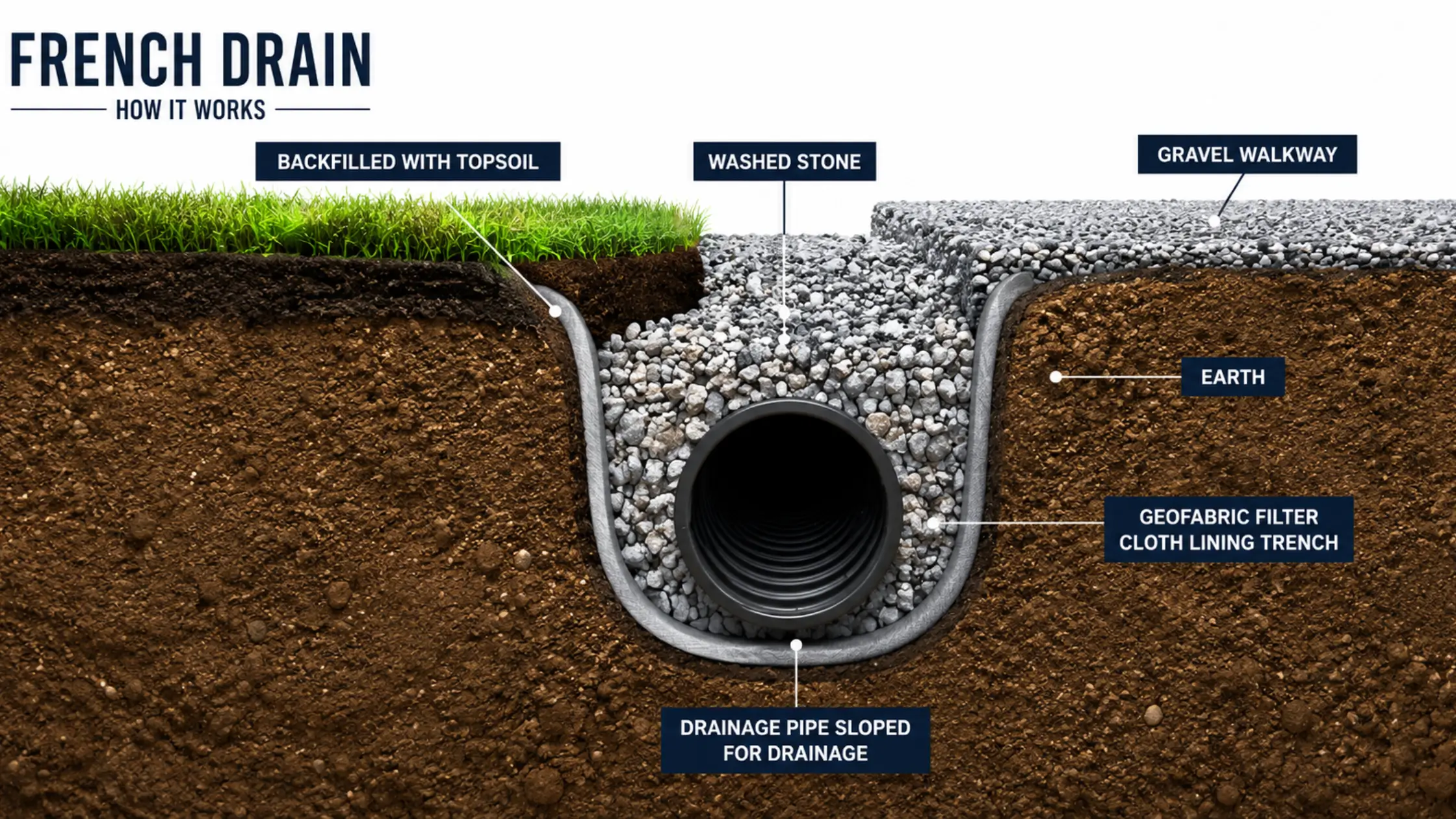
A French drain is an underground solution designed to manage surface water and redirect excess water away from structures, landscapes, and low-lying areas. It typically includes a perforated pipe placed within a trench filled with gravel and wrapped in filter fabric to prevent clogging from surrounding soil.
French drains are a key component of effective yard drainage systems, helping to resolve drainage problems by collecting water and moving it safely away from your home. These drainage systems are especially effective in areas with compacted soil where water cannot easily absorb into the ground.
Quick Answer
A French drain collects excess water and surface water through a perforated pipe buried in a trench filled with gravel, then redirects it away from problem areas to prevent standing water, improve yard drainage, and protect against structural damage.
How Does a French Drain Work?
French drains rely on gravity to move water efficiently through a drainage pipe system.
The process works in three steps:
- Water enters the gravel-filled trench.
- It flows into the perforated pipe.
- The pipe carries water away from your home to a safe discharge point.
Because water follows the path of least resistance, the trench filled with gravel becomes an effective channel for managing excess water, improving yard drainage, and preventing drainage issues.
Signs You Need a French Drain
Many homeowners overlook early signs of a drainage issue until damage becomes severe.
Standing Water in Your Yard
Persistent standing water after rainfall indicates poor yard drainage and excess water buildup.
Wet Basement or Crawl Space
Water intrusion often signals that groundwater is not being properly redirected.
Soil Erosion
Uncontrolled surface water can wash away landscaping and destabilize surrounding soil.
Foundation Cracks
Excess moisture creates pressure against foundation walls, leading to structural damage.
Soggy Lawns
Areas that remain wet may indicate compacted soil preventing proper yard drainage.
Water Pooling Near Buildings
Water should always flow away from your home, not toward it.
Benefits of Installing a French Drain
Prevents Foundation Damage
French drains help reduce hydrostatic pressure by directing water away from your home, protecting foundations from cracking and shifting.
Improves Yard Drainage
A properly installed French drain enhances overall yard drainage by eliminating water buildup and promoting healthier soil conditions.
Eliminates Standing Water
A properly designed French drain system removes excess water from low areas, improving usability and preventing muddy conditions.
Protects Landscaping
By controlling water flow, French drains help preserve plants, mulch, and soil structure.
Reduces Mosquito Breeding Areas
Eliminating standing water reduces mosquito habitats and improves outdoor comfort.
Increases Property Value
Effective drainage systems demonstrate proper maintenance and enhance curb appeal.
Types of French Drains
Exterior French Drain
Installed around the perimeter of a home to intercept groundwater before it reaches the foundation.
Interior French Drain
Placed beneath basement floors to manage water intrusion from below.
Curtain Drain
A shallow system designed to intercept surface water before it reaches problem areas.
Landscape French Drain
Used in yards and gardens to manage excess water and improve yard drainage.
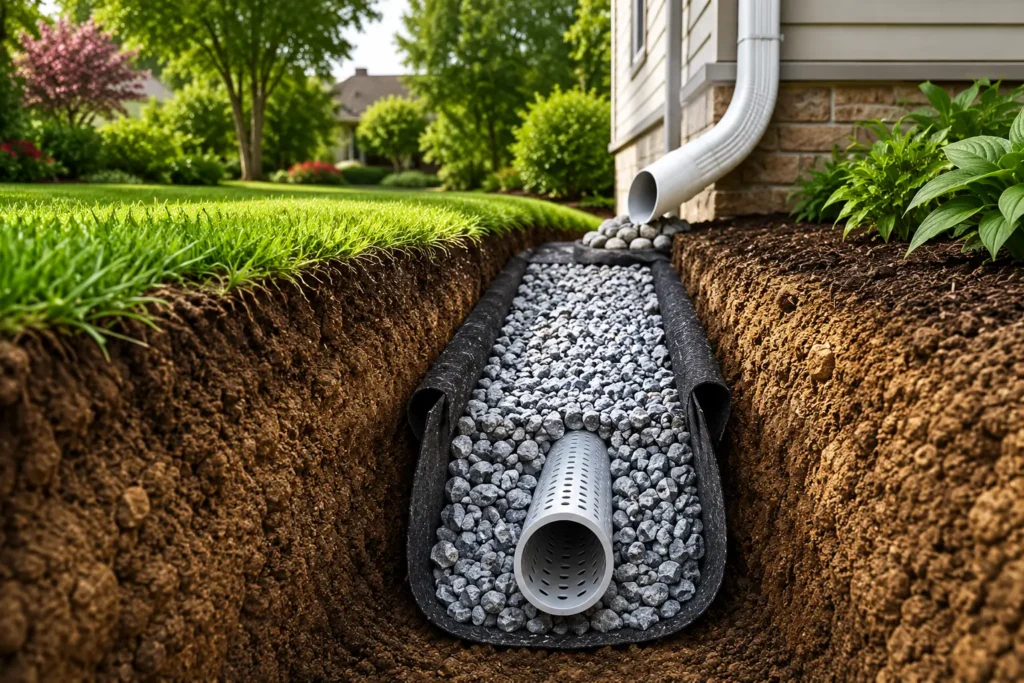
French Drain Installation Process
Proper French drain installation ensures long-term performance and reliability.
- Site Evaluation
Professionals assess water flow, soil conditions, yard drainage issues, and overall drainage problems.
A trench is dug, typically around 18 inches deep, depending on the drainage issue.
- Filter Fabric Installation
Fabric lines the trench to prevent clogging from surrounding soil.
- Gravel Placement
Gravel is added to create space for water movement.
- Perforated Pipe Installation
A perforated pipe is installed with proper slope to ensure efficient drainage.
- Backfilling
The trench is filled with gravel and covered.
- Final Grading
The surface is restored to guide water away from your home and improve yard drainage.
How Much Does a French Drain Cost?
Costs vary depending on:
- Length of the drainage pipe
- Soil conditions
- Accessibility
- Severity of drainage problems
- Additional yard drainage systems required
Some properties may also benefit from complementary solutions like channel drains, a rain garden, or a rain barrel to manage water more effectively.
French Drain vs Surface Drain
| Feature | French Drain | Surface Drain |
|---|---|---|
| Handles Groundwater | Yes | No |
| Handles Surface Water | Yes | Yes |
| Hidden Underground | Yes | Usually No |
| Foundation Protection | Excellent | Limited |
| Yard Aesthetics | Excellent | Visible Components |
In many cases, combining systems such as channel drains or a dry creek bed can enhance overall yard drainage performance.
Common French Drain Mistakes
Improper Slope
Without proper grading, water will not flow efficiently.
Missing Filter Fabric
This can lead to clogging from surrounding soil.
Incorrect Pipe Selection
Using the wrong drainage pipe reduces effectiveness.
Poor Discharge Planning
Water must be directed to a safe location away from your home.
DIY Installation Errors
Improper installation can worsen drainage problems and negatively impact yard drainage.
Why Professional Installation Matters
French drains require careful planning and execution to function properly.
Professionals evaluate:
- Soil composition
- Water flow patterns
- Property grading
- Yard drainage needs
- Long-term drainage solutions
A properly installed system can last decades, while poor installation may fail quickly.
Frequently Asked Questions
How long does a French drain last?
A professionally installed system can last with proper maintenance.
Can a French drain solve basement flooding?
Yes, it helps redirect groundwater and reduce water intrusion.
Do French drains require maintenance?
Periodic inspections ensure the system remains clear and functional.
Can a French drain be installed around an existing home?
Yes, both interior and exterior systems can be added to existing properties.
What is the best alternative to a French drain?
Alternatives include grading improvements, channel drains, dry creek beds, or rain gardens depending on the drainage issue and yard drainage needs.