If you’ve been researching excavation contractors, you’ve probably seen the phrase “engineered excavation.” It’s a term that’s often used in marketing, but not always explained clearly.
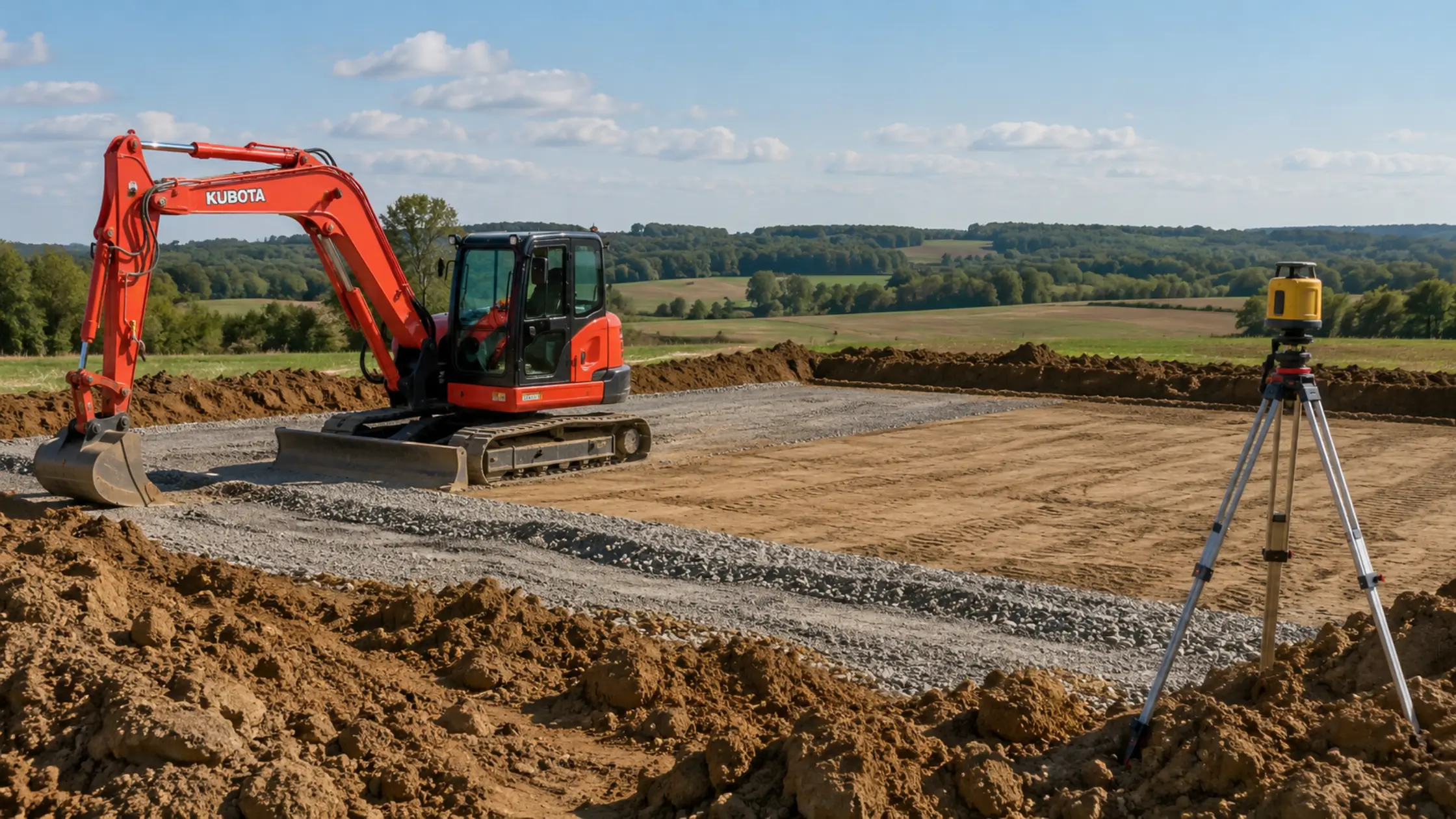
For a building pad, engineered excavation isn’t simply about using professional equipment or creating a level surface. It refers to a methodical process of evaluating soil conditions, preparing a stable foundation, verifying compaction, and managing water before construction begins.
These steps matter because the strength of a building starts below the concrete. A pad may look perfectly flat when construction is complete, but hidden problems beneath the surface can lead to settlement, foundation movement, and expensive repairs years later.
Throughout Southern Indiana, changing soil conditions, clay-rich ground, and seasonal rainfall make proper site preparation especially important. An engineered approach helps ensure the ground beneath your structure performs as intended for the long term.
Quick Answer
Engineered excavation is the process of preparing land using engineering principles instead of visual judgment alone. It focuses on creating a stable foundation by evaluating soil conditions, installing suitable fill, compacting materials in controlled lifts, testing soil density, and designing proper drainage before construction begins.
A properly engineered building pad typically includes:
- Soil evaluation before excavation begins
- Removal of unsuitable or unstable materials
- Structural fill installed in controlled layers
- Compaction testing to verify density
- Grading that directs water away from the future foundation
Each step helps reduce the risk of settlement, foundation movement, and drainage issues after the building is complete.
At a Glance: Engineered Excavation
| Engineering Step | Why It Matters |
|---|---|
| Soil Evaluation | Identifies unstable ground before construction begins |
| Proper Sub Base Preparation | Creates consistent support beneath the structure |
| Lift by Lift Compaction | Reduces future settlement |
| Compaction Testing | Verifies the required soil density has been achieved |
| Drainage Planning | Helps protect the foundation from water related movement |
Engineered Excavation vs Standard Excavation
Although both services involve moving earth, the preparation process is very different.
| Standard Excavation | Engineered Excavation |
|---|---|
| Clears and grades the site | Evaluates existing soil conditions |
| Places fill as needed | Removes unsuitable soils before rebuilding |
| Compacts soil visually | Compacts soil in controlled lifts |
| Assumes adequate density | Verifies compaction through testing |
| Focuses on appearance | Focuses on long term structural performance |
From the surface, both completed building pads may appear similar. The difference is what happens beneath the ground and whether the pad has been prepared to support the structure for decades instead of simply passing a visual inspection.
What Happens During an Engineered Building Pad?
1. Soil Evaluation
Every successful building pad begins with understanding the ground beneath it.
Before excavation starts, existing soil conditions should be evaluated to determine whether the site can safely support the planned structure. This includes identifying unsuitable materials, areas with poor drainage, and soils that may expand or settle over time.
Southern Indiana properties often contain clay rich soils that behave differently than sandy or rocky ground. Clay absorbs moisture, expands during wet periods, and contracts as it dries. Without proper evaluation, these natural movements can affect the stability of a foundation long after construction is complete.
This is why soil evaluation is one of the most important steps in engineered excavation. It allows excavation work to be tailored to the site’s actual conditions instead of relying on assumptions. Learn more about our Building Pads & Concrete Pad Preparation services. The Purdue Extension provides helpful information about Indiana soil characteristics and land management:
2. Proper Sub Base Preparation
Once the site has been evaluated, unsuitable materials are removed before new structural fill is installed.
Organic soils, loose fill, saturated ground, and unstable materials cannot provide reliable support beneath a building. Leaving them in place increases the likelihood of uneven settlement after construction.
Instead, engineered excavation creates a stable sub base by removing weak material and replacing it with properly selected structural fill.
This step distributes structural loads more evenly across the building pad and creates a stronger foundation for everything that follows.
Skipping proper sub base preparation may reduce construction time, but it often increases the risk of costly repairs later.
3. Structural Fill Is Compacted in Controlled Lifts
After unsuitable material has been removed, structural fill is placed to create the finished building pad. How this material is installed is just as important as the material itself.
Rather than placing large amounts of fill at one time, engineered excavation builds the pad in controlled lifts, which are thin layers compacted individually before the next layer is added.
This process creates consistent density throughout the entire pad.
When fill is dumped in thick layers, the surface may appear firm while deeper material remains loose. Over time, these hidden weak areas can compress under the weight of the structure, leading to uneven settlement.
Proper lift compaction helps:
- Create uniform support beneath the foundation
- Reduce future settlement
- Improve long term load bearing performance
- Build a more reliable foundation for concrete placement
Every layer contributes to the stability of the finished structure, making this one of the most important stages of engineered excavation.
4. Compaction Testing Verifies the Work
A building pad can look perfectly compacted while still containing soft areas beneath the surface.
That’s why engineered excavation relies on compaction testing, not visual inspection alone.
Testing measures whether the soil has reached the density required to safely support the planned structure.
Instead of assuming the ground is ready because equipment has driven across it, testing provides measurable verification that the pad performs as intended.
This is especially important for:
- Commercial buildings
- Pole barns
- Large garages
- Industrial facilities
- Projects requiring engineering documentation
Without testing, there is no objective way to confirm the building pad meets specification.
Many municipalities also require documentation before construction can continue.
If your project requires engineering documentation, learn more about our Engineering & Compliance Services. For permitting information, visit the Indiana Department of Homeland Security Building and Fire Safety Division.
5. Drainage Is Designed Into the Building Pad
Many people think a building pad only needs to support weight.
In reality, it also needs to manage water.
Water is one of the leading causes of long term foundation movement because saturated soils lose strength over time. Even properly compacted material can begin to soften if runoff continually collects around the foundation.
Engineered excavation considers:
- Finished grading
- Surface runoff
- Slope direction
- Water collection points
- Future drainage improvements
Instead of allowing water to pool around the slab, the finished grade directs runoff away from the structure.
This protects both the foundation and the surrounding property.
If additional drainage improvements are needed, they can often be incorporated before construction begins rather than after problems develop. Planning drainage early often reduces future repairs. Learn more about our French Drains & Yard Drainage solutions.
Why This Matters in Southern Indiana
Not every region presents the same excavation challenges.
Southern Indiana’s landscape combines rolling terrain, seasonal rainfall, expansive clay soils, and changing elevations. These natural conditions influence how water moves across a property and how the ground behaves beneath a structure.
Several factors make engineered excavation especially valuable in this region.
Clay Rich Soils
Large portions of Southern Indiana contain clay soils that expand as they absorb moisture and shrink as they dry.
These seasonal changes create movement beneath foundations when building pads are not properly prepared.
Rolling Terrain
Properties throughout Bloomington, Bedford, Martinsville, Springville, Ellettsville, Seymour, Mitchell, Bargersville, and Greenwood often include natural slopes.
Without proper grading, rainwater gains speed as it travels downhill, increasing erosion and concentrating runoff around structures.
Heavy Seasonal Rainfall
Stormwater that is not directed away from the building pad gradually weakens supporting soils.
- Over time this can contribute to:
- Settlement
- Standing water
- Foundation movement
- Erosion around the structure
Freeze and Thaw Cycles
During winter, moisture within the soil freezes and expands.
As temperatures rise, the soil contracts again.
These repeated cycles place additional stress on poorly prepared building pads and make proper compaction even more important.
Understanding how Southern Indiana soils behave allows excavation work to be designed for long term performance rather than short term appearance.
Common Shortcuts That Lead to Building Pad Failure
Most foundation problems begin long before concrete is poured. They often result from shortcuts taken during site preparation.
Skipping Soil Evaluation
Every property contains different soil conditions.
Assuming all ground behaves the same increases the risk of building on unstable material.
Leaving Unsuitable Soil in Place
Organic material and saturated soils cannot provide reliable structural support.
Removing these materials creates a stronger foundation before fill is installed.
Compacting Thick Layers
Large lifts save time during construction but frequently leave loose material beneath the surface.
Compacting each lift individually creates much more consistent support.
Not Verifying Compaction
Without testing, compaction becomes an assumption instead of a measurable result.
Verification provides confidence that the building pad meets engineering requirements.
Ignoring Drainage
Water is one of the biggest threats to long term building performance.
Without proper grading, runoff gradually weakens supporting soils and increases the likelihood of settlement.
Why Alchemy Excavation Takes an Engineering First Approach
At Alchemy Excavation, engineered excavation is not simply a marketing phrase.
It describes the process behind every building pad.
As a company owned and operated by a licensed Professional Engineer with more than 25 years of civil engineering experience, projects are approached by first understanding how the land behaves before determining how it should be excavated. This engineering led process aligns with Alchemy’s focus on explaining why each step matters, emphasizing long-term performance over short-term appearance.
Rather than focusing only on moving dirt, every project considers:
- Existing soil conditions
- Water movement across the site
- Structural loading requirements
- Proper compaction methods
- Long term drainage performance
This process helps create building pads designed to support structures reliably for years to come instead of simply looking complete on the day construction finishes.
Request an Engineered Building Pad Evaluation
Whether you’re preparing land for a custom home, detached garage, pole barn, agricultural building, or commercial facility, the quality of the finished structure begins with proper site preparation.
At Alchemy Excavation, every building pad is approached with engineering principles that prioritise soil stability, drainage performance, and long term structural support. Instead of relying on appearance alone, we evaluate how the land behaves so it can perform reliably for years to come.
We proudly serve property owners throughout Bloomington, Bedford, Springville, Ellettsville, Mitchell, Seymour, Martinsville, Bargersville, Greenwood, and surrounding Southern Indiana communities.
If you’re planning a construction project, request a free estimate and learn how engineering led excavation can help protect your investment before concrete is ever poured.
Free estimates. No fluff. Real results.
Frequently Asked Questions
What does engineered excavation mean?
Engineered excavation is the process of preparing a construction site using engineering principles rather than visual judgement alone. It includes soil evaluation, proper sub base preparation, lift by lift compaction, compaction testing, and drainage planning to create a stable foundation for a structure.
Do I need an engineered building pad for a residential garage or pole barn?
Requirements vary depending on the project and local permitting authority. However, engineered preparation helps reduce the risk of uneven settlement, slab cracking, and drainage issues for residential, agricultural, and commercial structures alike.
What is compacted pad certification?
Compacted pad certification documents that the building pad has been prepared and compacted to meet specified engineering standards. Many commercial buildings, pole barns, and larger construction projects require this documentation before construction progresses.
Why is compaction testing important?
Compaction testing verifies that the soil has reached the required density to safely support structural loads. Without testing, there is no reliable way to confirm that the building pad meets engineering specifications.
Can poor drainage damage a building pad?
Yes. Water that remains around the foundation gradually weakens supporting soils, increasing the likelihood of settlement, erosion, and long term structural movement. Proper grading and drainage planning help protect the building pad throughout the life of the structure.
Is engineered excavation worth the additional planning?
For most permanent structures, yes. The cost of proper site preparation is often small compared to the expense of repairing foundation issues caused by settlement or poor drainage after construction.