Hillside Property Drainage: Lessons from Martinsville Area Jobs
Table of Contents
Property owners often assume drainage problems are the same regardless of terrain. In reality, flat lots and hillside properties behave very differently when water moves across the landscape. On level ground, poor drainage usually creates standing water. On a hillside, gravity changes everything. Water accelerates downhill, concentrates into narrow channels, and begins eroding soil long before many homeowners realize damage is occurring.
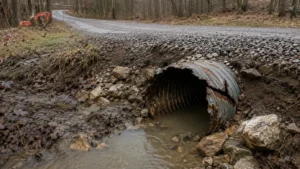
Around Martinsville and throughout Morgan County, rolling terrain is common. Neighborhoods built near the hills surrounding Morgan Monroe State Forest frequently experience drainage challenges that simply do not occur on flatter properties. These include driveway washouts, unstable slopes, exposed tree roots, foundation runoff, and severe erosion after heavy rain.
As a licensed Professional Engineer with more than twenty five years of civil engineering experience, Sam Robertson evaluates hillside drainage differently than a standard excavation project. Every slope has unique characteristics that determine how water should be managed. The goal is not simply moving water away. The goal is controlling where it travels, how quickly it moves, and preventing it from damaging the property over time.
Understanding these lessons helps explain why hillside drainage Martinsville IN requires a different approach than drainage on flat residential lots.
Why Slope Changes the Entire Drainage Equation
Water always follows gravity.
That sounds obvious, but many drainage failures happen because people underestimate how dramatically gravity changes water behavior on a hillside.
On flat ground, water usually spreads across the surface before slowly infiltrating into the soil. Even if drainage is poor, the result is often localized ponding or saturated turf.
On a hillside, water behaves differently.
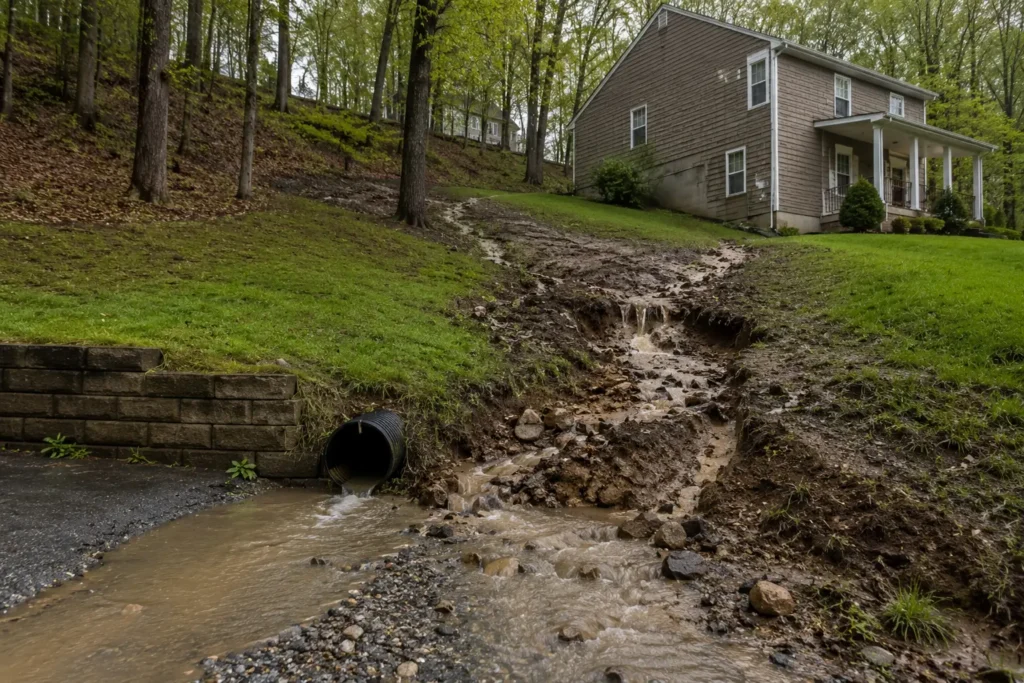
Instead of spreading, runoff gains speed as it travels downhill. Small amounts of water combine into larger flows that naturally seek the lowest point available. Once concentrated, runoff begins carrying soil with it, cutting channels into the ground and increasing erosion after every storm.
This creates several common problems:
Washed out gravel driveways
Eroding slopes
Soil movement beneath retaining areas
Water reaching foundations
Damage to landscaping
Sediment collecting at the bottom of the property
Many Martinsville properties include moderate to steep grades that make these problems especially common. Proper drainage on a slope requires understanding how runoff behaves before excavation begins, not after damage appears.
Lesson One: Grading Sequence Matters More Than the Final Grade
One of the biggest misconceptions about hillside excavation is that the finished grade is all that matters.
In reality, how the grading work is performed can be just as important as the final result.
During excavation, soil becomes loose and vulnerable. If large portions of a hillside are disturbed before temporary erosion control measures are installed, a single heavy rain can undo weeks of work.
This often creates:
sediment washing downhill
unstable slopes
damaged seed beds
clogged drainage paths
erosion requiring additional repairs
The proper sequence typically involves:
Install temporary erosion control first
Silt fencing, diversion methods, or temporary drainage features help reduce runoff while work is underway.
Shape the slope carefully
Grading should gradually establish the intended drainage pattern rather than creating steep transitions that encourage fast-moving water.
Stabilize disturbed soil quickly
Bare soil should never remain exposed longer than necessary. Temporary stabilization reduces erosion before final landscaping is completed.
Skipping these steps often creates the exact drainage problems the project was intended to solve.
For larger projects involving hillside grading Morgan County, careful sequencing protects both the property and neighboring lots located downhill.
Lesson Two: Water Needs a Planned Route, Not Just an Escape
One of the most common comments property owners make is:
“The water just needs somewhere to go.”
While technically true, the better question is:
Where should it go?
On hillside properties, allowing runoff to find its own path usually means water travels toward the easiest route, not the safest one.
That path often includes:
driveways
garage entrances
neighboring properties
basement walls
crawl spaces
retaining slopes
Simply directing water away from one area may unintentionally increase problems elsewhere.
Professional drainage planning considers the entire site, including:
Existing topography
Understanding natural drainage patterns helps determine where water already wants to travel.
Collection points
Runoff should be intercepted before it gains excessive speed.
Controlled discharge
Collected water needs a stable outlet that prevents erosion further downhill.
Long term maintenance
Drainage systems should remain effective through seasonal rainfall and changing ground conditions.
Rather than forcing water to disappear, engineered drainage manages it predictably from beginning to end.
This is why we evaluates the complete property instead of recommending isolated drainage fixes.
Lesson Three: Older Hillside Homes Often Have Original Grading That Was Not Designed for Today’s Runoff
Many drainage calls in the Martinsville area involve homes that have stood for decades without significant issues. Homeowners are often surprised when erosion or water intrusion suddenly becomes a recurring problem.
In many cases, the landscape has changed even if the home has not.
Several factors can increase runoff over time:
New homes or developments built uphill
Additional driveways, patios, or parking areas that create more hard surfaces
Changes to roadside drainage or nearby ditches
Natural settling of the property’s original grading
Mature trees being removed, reducing water absorption
Older grading plans were often designed for the conditions that existed when the home was built. As surrounding properties develop and drainage patterns change, the original grading may no longer provide adequate protection.
This is why simply filling an eroded area or installing a short section of drain pipe rarely solves the underlying problem.
Instead, the entire site should be evaluated to understand:
Where runoff originates
How water concentrates across the slope
Whether existing drainage systems are functioning properly
If grading adjustments are needed to restore positive drainage
For many hillside properties, solving today’s drainage issues requires looking at the property as a complete system rather than addressing one wet area at a time.
Lesson Four: Erosion Control Is Structural Protection, Not Just Landscaping
One of the biggest misconceptions about hillside properties is that erosion control is primarily cosmetic.
It is not.
On level ground, losing a small amount of topsoil may simply create bare patches in the lawn. On a slope, that same soil loss can gradually undermine the stability of the entire site.
As runoff removes soil over multiple seasons, it can lead to:
Driveway edge failures
Exposed utility lines
Foundation settlement concerns
Washed out landscaping
Slope instability
Sediment entering nearby waterways
Effective erosion control for sloped lots in Indiana focuses on protecting the structural integrity of the property.
Depending on site conditions, this may include:
Proper Surface Grading
Grading shapes the land so runoff follows controlled flow paths rather than creating new erosion channels after every storm.
Engineered Drainage Systems
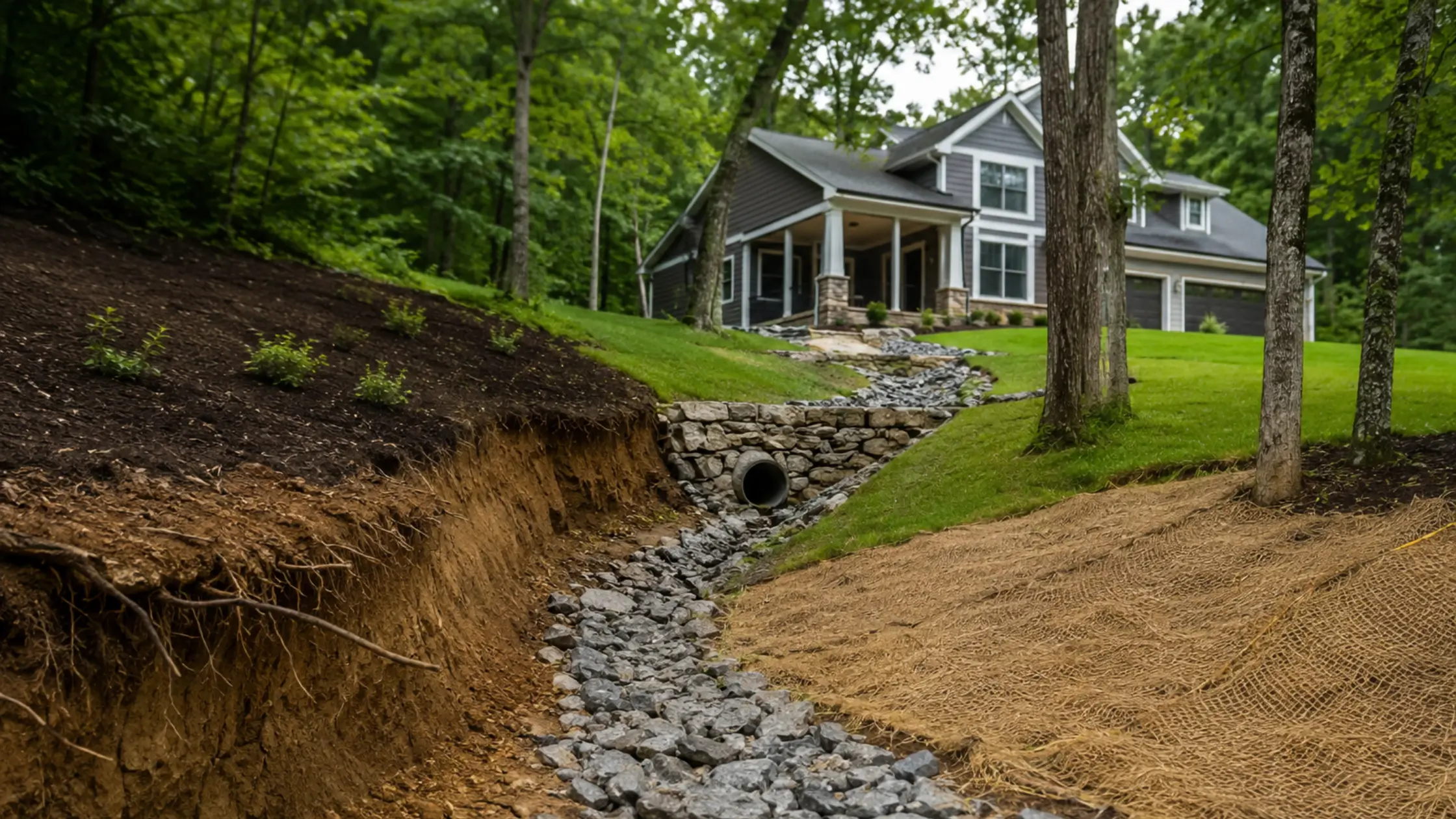
French drains, swales, culverts, and surface drainage features help intercept water before it accelerates down the slope.
Soil Stabilization
Vegetation, erosion control blankets, and other stabilization methods help secure exposed soil while permanent ground cover becomes established.
Controlled Water Discharge
Every drainage system needs an outlet that safely releases water without creating additional erosion farther downhill.
Each measure works together to reduce water velocity and protect the property’s long-term stability.
Why Engineering Judgment Matters More Than Equipment
Excavators, skid steers, and grading equipment are valuable tools, but they do not determine whether a hillside drainage project succeeds.
Success begins with understanding how water behaves across the site before excavation starts.
Every hillside property presents unique variables, including:
Slope percentage
Soil composition
Existing drainage patterns
Surface water collection
Foundation elevations
Downstream discharge locations
Evaluating these conditions requires experience beyond operating equipment.
As licensed Professional Engineer with more than twenty five years of civil engineering experience, can develops drainage solutions by evaluating grading, runoff, erosion risk, and long-term property performance together.
Rather than treating a hillside like a flat lot with extra elevation, each project is planned around how water naturally moves across the landscape.
This engineering-first approach helps reduce future maintenance, minimizes erosion, and protects both the property and surrounding areas from unintended drainage problems.
Final Thoughts
Managing water on a hillside requires more than redirecting runoff after problems appear. Successful drainage begins with understanding how the land naturally sheds water and developing a plan that works with the property’s topography rather than against it.
Whether the issue involves erosion, driveway washouts, or foundation runoff, addressing the root cause usually prevents more extensive repairs in the future.
For homeowners throughout Martinsville and Morgan County, investing in engineered drainage planning provides greater long-term protection than temporary fixes that only address visible symptoms.
Need Help with Hillside Drainage?
If you’re dealing with erosion, runoff, or drainage issues on a sloped property near Martinsville or anywhere in Southern Indiana, start with an evaluation from a team that understands hillside conditions.
At Alchemy Excavation, every drainage project is approached from an engineering perspective. We evaluate grading, runoff patterns, soil behavior, and long-term site performance before recommending a solution, helping ensure your investment protects your property for years to come.
Why does my hillside property flood or erode differently than a flat lot?
On sloped ground, water gains speed as it moves downhill. Instead of spreading out and slowly soaking into the soil, runoff concentrates into narrow flow paths that increase erosion and can threaten driveways, retaining areas, and foundations if not properly managed.
Do I need erosion control if I am only regrading part of my property?
In most cases, yes. Even temporary soil disturbance on a hillside can create significant erosion during construction. Installing erosion control measures before major grading begins helps prevent sediment loss and protects newly shaped slopes.
My house is older. Why is drainage becoming a problem now?
Many older homes were graded for conditions that existed decades ago. New development, additional paved surfaces, changes to neighboring properties, and natural settlement can all increase runoff. A complete site evaluation often identifies issues that simple repairs cannot address.
Is hillside drainage more expensive than drainage on a flat lot?
Every property is different. Hillside projects often require additional planning for grading sequence, erosion control, and runoff management. Rather than using a standard pricing model, Alchemy Excavation evaluates each property based on its unique terrain and drainage conditions.